
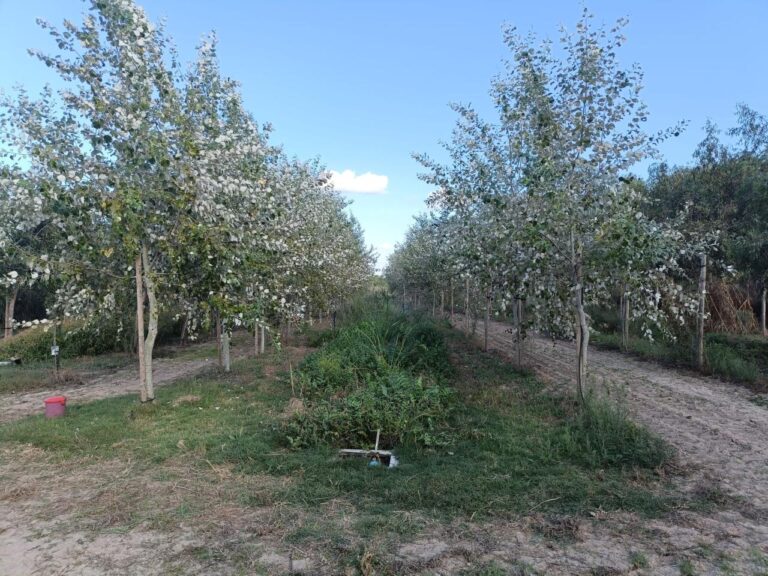
This Case Study is located in Arborea, a town and municipality in the Oristano province, in Sardinia (Italy) and it is characterised for being a farming district. Arborea plain was initially a swamp which was reclaimed between 1920 and 1930: sand dunes were flattened and brackish and salted wetlands were drained, and it was all transformed into agricultural land. The resulting plain was divided in rectangular fields with the long side-oriented North-South, delimited and protected by eucalyptus edges and surrounded by a drainage network consisting of main channels and a dense network of smaller ones.
Nowadays the Arborea plain represents one of the most productive agricultural sites in Italy. Part of the forage cropping is based on local production of fibre from the double cropping of silage maize and Italian ryegrass for hay or a winter cereal for silage, representing over 80% of the irrigated plain. Almost all the remaining area in the district is grown with meadows of alfalfa and horticultural crops.
The Arborea plain is surrounded by several marsh wetlands hosting significant biodiversity, including migratory birds, amphibian, and reptile species classified as community interest breeding vertebrates. The climate is classified as semi-arid Mediterranean, characterized by warm summers, mild winters, and a high-water deficit from May to September. Environmental conditions are further influenced by the designation of part of the Arborea Municipality as a Nitrate Vulnerable Zone (NVZ) of agricultural origin. The Arborea plain includes two Hydrogeological units – the Sandy Hydrogeological Unit and the Alluvial Hydrogeological Unit – both containing interconnected aquifers. Nearly 50% of the groundwater samples from these aquifers exceed the 50mg/l nitrate concentration threshold, a value recommended by the WHO. The main source of nitrate pollution in the groundwater of the area are the effluents from intensive dairy cattle farming system. Nitrate groundwater pollution therefore represents the main environmental challenge faced by the region.
The main objective of this case study was to improve groundwater storage and quality by upgrading existing nature-based practices to mitigate groundwater nitrate contamination.
–



This project has received funding from the European Union’s PRIMA Research and innovation programme under Grant Agreement No 2221.