
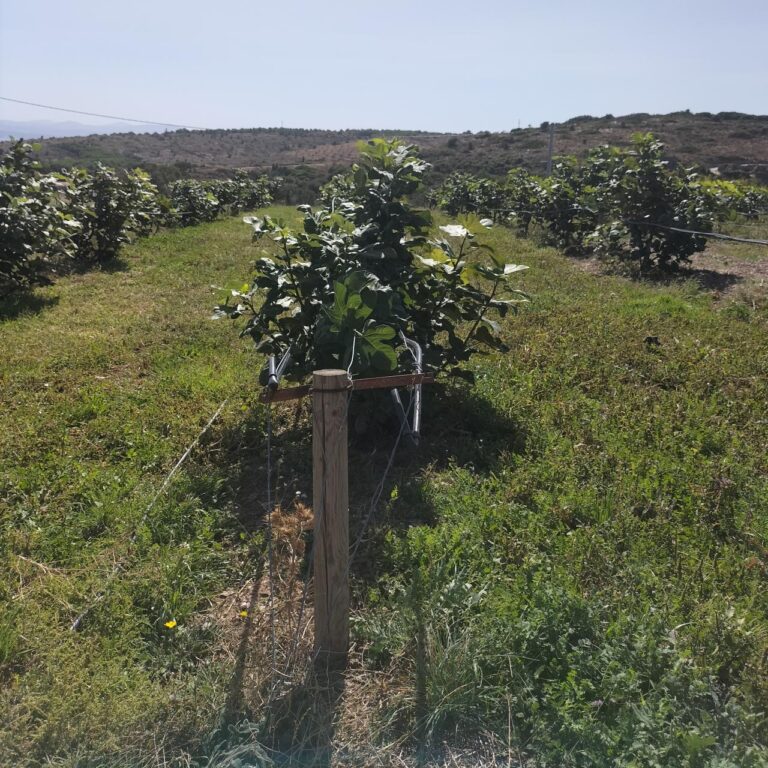
Bozcaada has great relevance in the area geographically and geopolitically, being the third larger Turkish island. Bozcaada island has a surface of 37.600 ha, with a population of 3.120 inhabitants (2022). Climate is characterised as hot-summer Mediterranean, with warm and dry summers and long, cold and wet winters; wind is a common factor throughout the whole year. The island counts on two amphibian species, 14 of reptiles, 11 of mammals and 103 of birds, from which eleven are endangered according to the IUCN Threatened Species List. Existing vegetation is typical from the eastern Mediterranean regions, mostly dominated by shrubs and herbs, but also small forest patches appear on the landscape. It has natural protected areas, according to Turkish legislation and archaeological relevant sites dating from the Greek era. Nowadays, tourism, winemaking and fishing drive the socio-economic structure of Bozcaada. Most of the people is dedicated to tourism activities and around 10% develop agricultural activities.
Given the characteristics of the island, there are no continuously flowing rivers or streams; water needs are covered thanks to a small number of interconnected wells and one fountain, but, during summer months, when population hugely increases due to tourism, the supply does not meet the demand. The exploitation of the wells has led to a decrease in the water table, risking salt intrusion from the surrounding Aegean Sea standing as a major challenge from the water resources point of view. To cope with increased demand during summer months, from the 2000s a constructed pipeline transfers water from mainland to the island. In summary, the main challenges of the island are related to water stress: increased demand, risk of aquifer salinization, the existing precipitation regime, the island’s morphology and increasing temperatures due to climate change.
The main objective of this case study was to improve the quantity and quality of groundwater, improve natural infiltration, reduce surface runoff and improve agriculture practices and distribution systems efficiency.
–



This project has received funding from the European Union’s PRIMA Research and innovation programme under Grant Agreement No 2221.